
the practice of Traditional Thai Massage & Bodywork
Kevin Lynch has spent over two decades studying, practicing and teaching traditional bodywork rooted in the healing traditions of Northern Thailand. Every modality he works with, from Thai massage to herbal compress to cupping, is informed by the same foundational principles: sen line theory, energetic awareness and the belief that the body heals most effectively when treated as a whole system.
The work described is a map of Kevin's training and the knowledge base he brings to every session and every certification course he teaches.
Thai Massage
Traditional Thai Massage is one of the world's oldest healing arts, originating over 2,500 years ago in the temples of Thailand. Often called "passive yoga" or "lazy man's yoga," it is a clothed, floor-based practice that combines acupressure, sen line work, joint mobilization and assisted stretching into a single continuous session.
Unlike Western massage, Thai massage does not use oil or a table. The recipient remains fully clothed on a padded floor mat and is guided through a series of supine, prone, side-lying and seated positions. The practitioner uses hands, forearms, elbows, knees and feet to apply rhythmic compression along the body's ten major sen lines — the energetic pathways that, in traditional Thai medicine, govern physical and emotional well-being.
When sen lines are clear and energy moves freely, the body can do what it is designed to do: heal, regulate and restore itself.
Thai massage addresses all layers of the self — physical, mental, emotional, energetic and spiritual. Benefits include deep relaxation, increased mobility and flexibility, nervous system regulation and an overall sense of alignment and well-being.
Table Massage
While table massage is the most common form of bodywork in the Western world, Kevin's approach is anything but conventional. Every session is informed by Thai massage principles: sen line awareness, rhythmic compression and passive movement layered into the structure of a traditional table session.
The recipient lies unclothed and draped on a massage table while Kevin applies a vegan massage cream to facilitate long kneading strokes, deeper neuromuscular work and joint movement. Sessions are fluid and responsive. If there's shoulder tension, cupping gets added. If an area needs increased circulation or focused healing, herbal compress comes in. Sessions are fluid and responsive, shaped by what the body needs that day rather than a fixed protocol.
This makes table massage a practical option for clients with injuries or limited mobility who aren't yet ready to work on the floor, without sacrificing the depth and intentionality of Thai-informed bodywork.
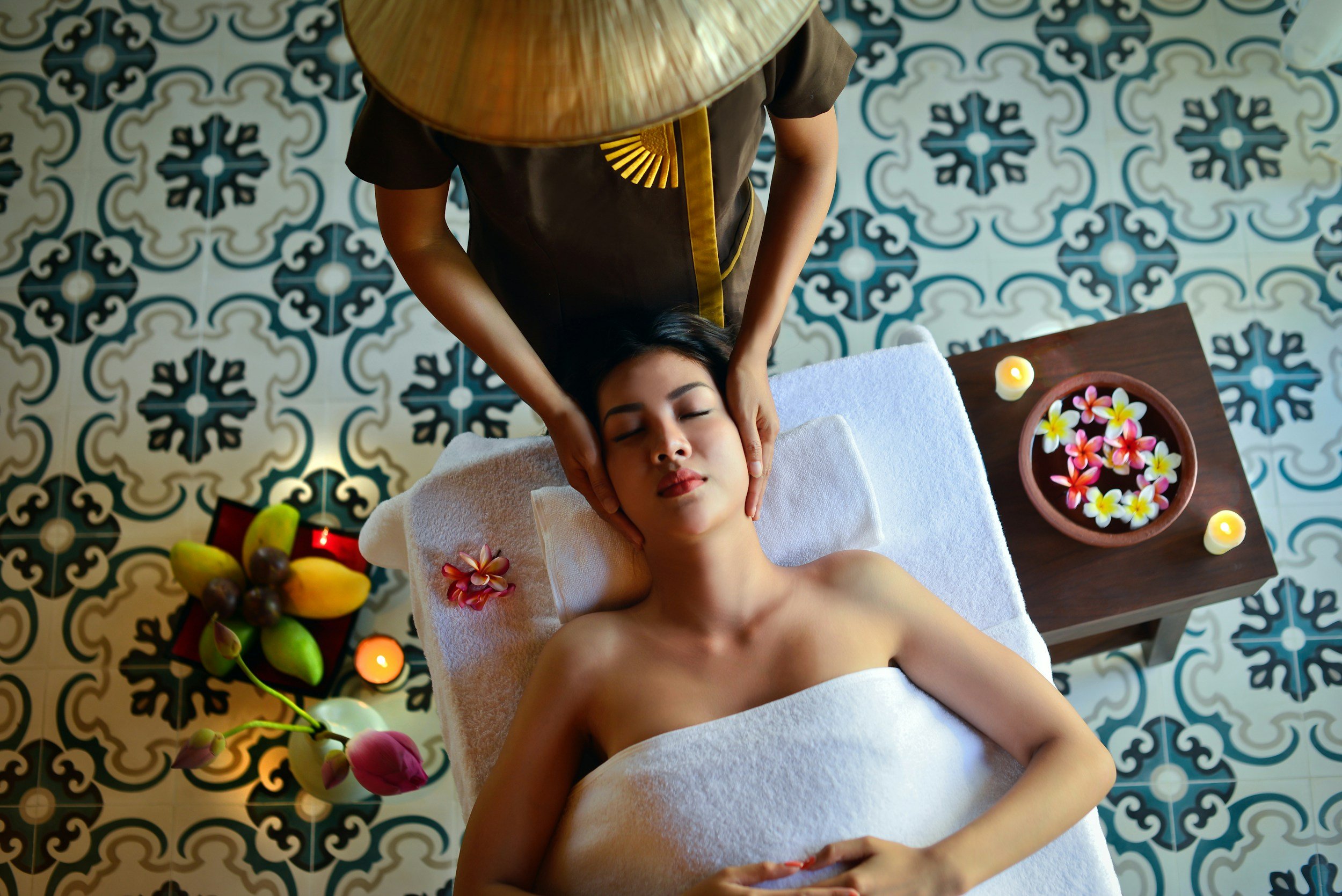
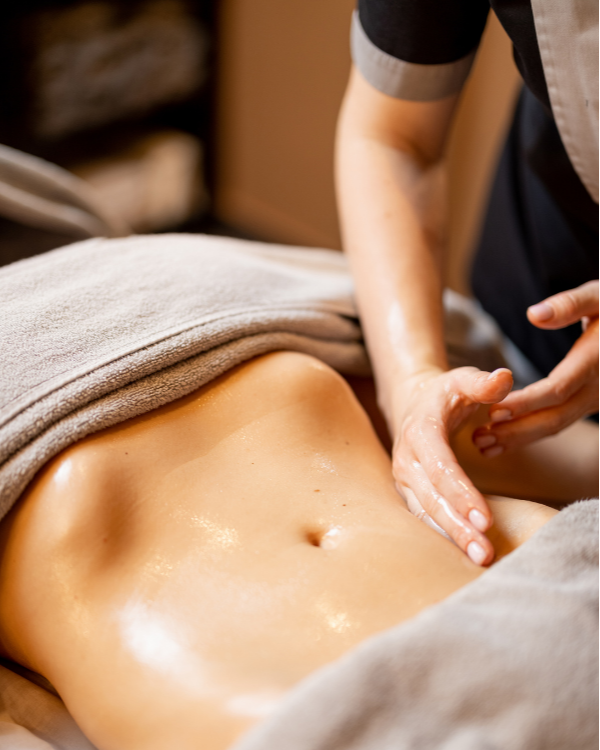
Chi Nei Tsang is a Taoist abdominal massage practice with roots in ancient Chinese medicine. The name translates roughly to "working the energy of the internal organs." Where most bodywork addresses the muscular and skeletal systems, Chi Nei Tsang works directly with the abdomen — the area Taoist tradition calls the Dan Tien and Western medicine increasingly recognizes as the body's second brain.
Stress, unprocessed emotion and physical tension accumulate in the abdominal region and, when left unaddressed, restrict the flow of energy throughout the entire body. Chi Nei Tsang uses gentle, intentional pressure around the navel and surrounding tissue to release that congestion, support the internal organs and restore energetic flow.
The practice is particularly effective for digestive issues including bloating, constipation and irritable bowel syndrome, as well as for clients carrying chronic stress or emotional tension they haven't been able to release through other forms of bodywork.
Chi Nei Tsang is a specialized modality that stands on its own as a complete practice. Kevin recommends it for clients experiencing chronic digestive issues, persistent stress that hasn't responded to other bodywork, or a sense of energetic stagnation they can't quite locate or release. It can be booked as a standalone session or integrated with Thai massage or table work when the body calls for deeper abdominal focus.
Abdominal Massage
Chi Nei Tsang
Herbal Compress
Luk Pra Kob
Herbal compress, known in Thai as Luk Pra Kob, is a traditional Thai healing practice in which bundles of medicinal herbs are steamed and applied directly to the body. The heat activates the therapeutic compounds in the herbs while the compression and movement of the bundles works the tissue, joints and sen lines simultaneously.
Kevin uses both hot and cold compress depending on what the session requires.
Hot Compress
Hot compress is applied to soften tissue, increase mobility and stimulate circulation before deep stretching work. Applied to the abdomen, it supports digestion and organ function. The aromatic properties of the herbs carry their own therapeutic value, with many traditional Thai herbs known for clearing congestion, calming the nervous system and balancing energy.
Cold Compress
Cold compress serves a different purpose entirely. After the herbs are cooked to release their beneficial compounds, the bundles are chilled and applied to acute injuries, sprains, strains and areas of inflammation. Cold compress reduces swelling, addresses pain and supports the body's natural healing response in the critical window following injury.
Herbal compress is rarely a standalone treatment. Kevin incorporates it into sessions where tissue needs preparation, circulation needs support or the body is working through an acute or chronic injury.


Tok Sen
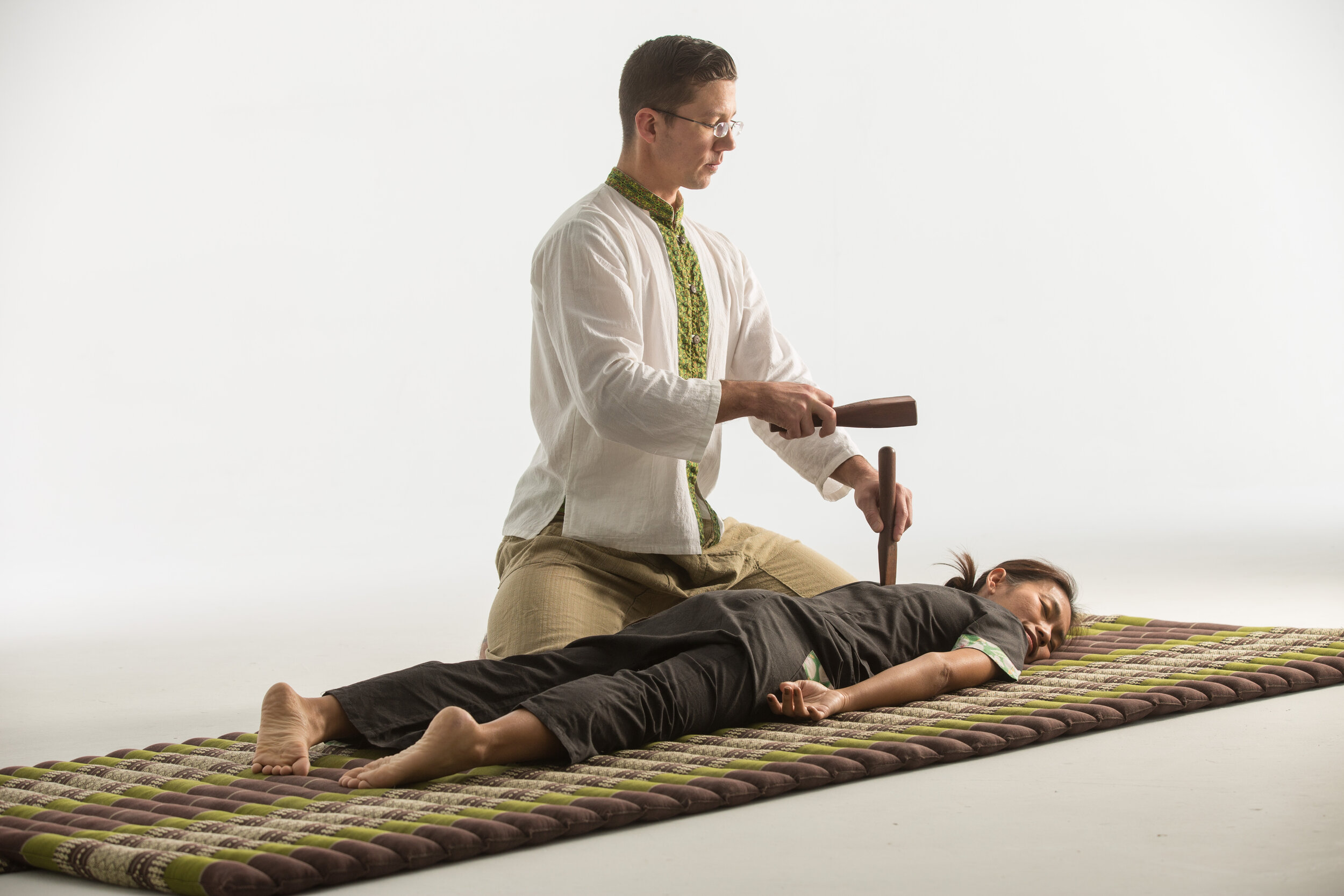
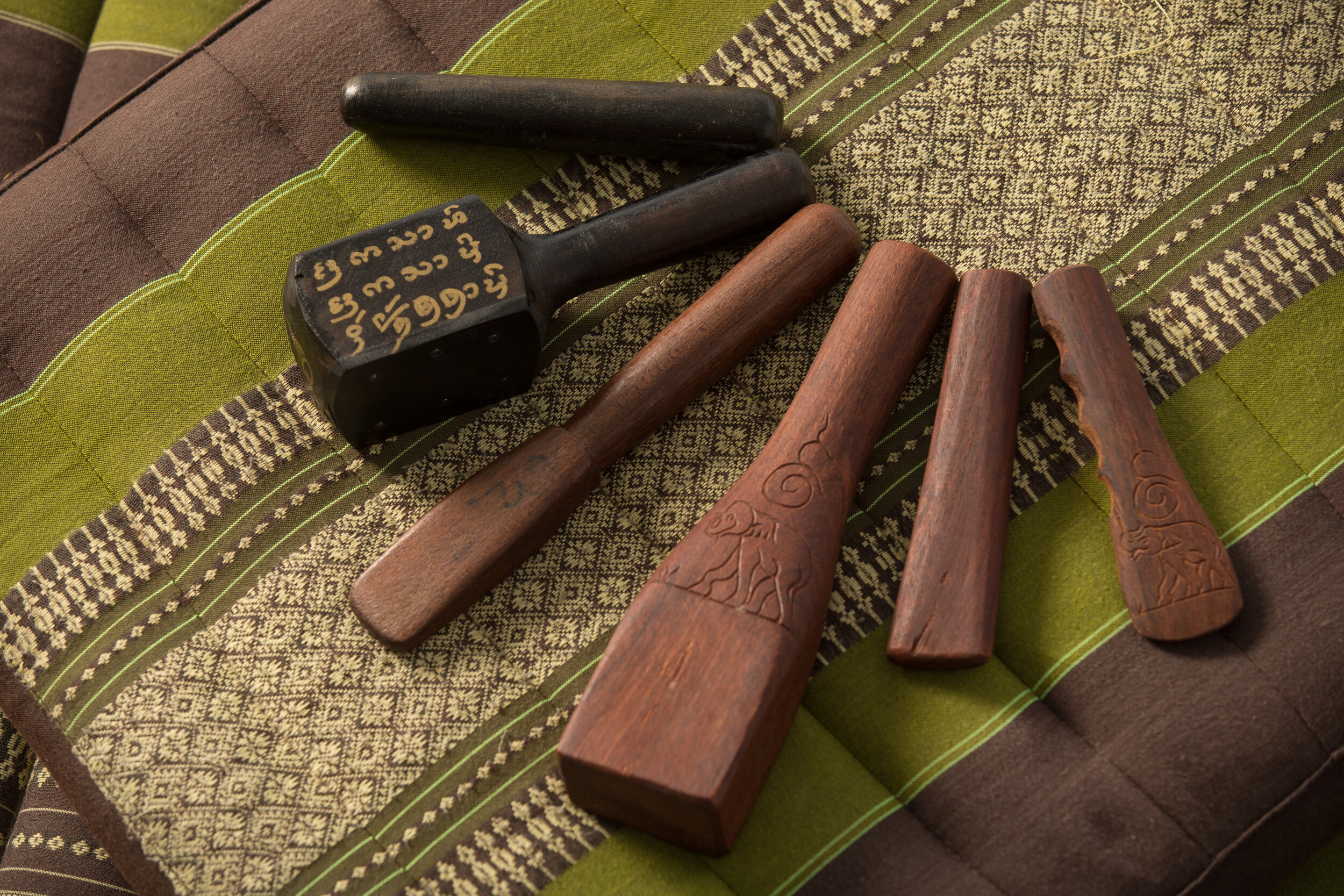
Tok Sen is a Northern Thai healing practice that predates Thai massage itself. The name is direct in its meaning: "tok" means to tap, "sen" means energy. A practitioner uses a hand-carved mallet and wedge, traditionally made from tamarind or mango wood, to deliver rhythmic tapping along the body's sen lines and into the connective tissue.
What makes Tok Sen distinct from other forms of bodywork is the vibration. The wooden instruments produce a deep resonant tone that travels through the tissue in a way manual pressure alone cannot replicate. That vibration, combined with targeted compression and passive stretching, works to release blocked energy, loosen fascia and address nerve compression that other modalities may not reach.
Tok Sen is particularly effective for muscle tightness and chronic pain, nerve-related conditions including neuropathy, restricted circulation and deep fascial adhesions. The sound produced during a session is part of the therapy, not incidental to it.
Kevin studied Tok Sen as part of his traditional Thai bodywork training and incorporates it into sessions where the body needs a different quality of input than hands alone can provide.
Gua sha
Gua Sha is an ancient healing technique rooted in traditional East Asian medicine. The name describes the method: "gua" means to scrape, "sha" refers to the redness that appears at the surface of the skin when stagnant blood and metabolic waste are brought up from the tissue. A smooth-edged instrument is pressed firmly along lubricated skin in slow unidirectional strokes, releasing congestion from the superficial layers of muscle and connective tissue.
The redness that results is not bruising. It is the body's circulation responding — evidence that stagnant tissue is being cleared and fresh blood is moving into the area. It typically resolves within a few days.
Modern research has confirmed what traditional practitioners have observed for centuries: Gua Sha produces a measurable anti-inflammatory and immune-protective response that can persist for days following a single treatment. It is effective for acute and chronic pain, muscle tension, fever, respiratory congestion and inflammatory conditions affecting the internal organs.
Kevin uses Gua Sha as a targeted intervention within sessions, most often when a specific area of the body is holding deep stagnation that compression and stretching alone haven't fully resolved.


Cupping Therapy
Cupping is one of the oldest forms of therapeutic bodywork, with roots in ancient Egyptian, Chinese and Middle Eastern healing traditions. Specially designed cups are applied to the skin to create suction, lifting the superficial layers of tissue rather than compressing them. This reversal of pressure draws stagnant blood and metabolic waste toward the surface, stimulates circulation and creates space within the tissue for fresh blood flow and healing.
The lifting action of cupping reaches layers of fascia and connective tissue that compression-based techniques cannot always access. It is particularly effective for chronic muscle tension, restricted mobility, inflammation and areas where circulation has become sluggish due to injury or overuse.
The marks cupping sometimes leaves on the skin are not bruises. They are a visible indicator of where the body was holding stagnation and typically resolve within several days.
Kevin incorporates cupping intuitively within sessions based on what the body presents. If a shoulder is guarding, if an area needs increased blood flow to support healing, or if deep fascial tissue isn't responding to manual work alone, cupping becomes part of the session. It is rarely booked as a standalone treatment but rather works as one tool within a larger, responsive approach to the body.


